
Sports club sponsorship rarely starts with big companies. It starts with people who already know you: parents, members, former players and local businesses. Small clubs usually get further with several partners who each give a manageable amount than by hunting for one big backer. Three things matter: asking the right people, offering something concrete and writing to them personally. Further down you will find a sample letter to copy and adapt.
Finding sponsors for small clubs: who should you ask?
Start with a list, not with letters. Sit down with the committee, the coaching team and a few parents and write down who knows whom. A business is far more likely to say yes if someone from the club approaches them personally.
- Businesses run by parents and members: tradespeople, doctors' surgeries, law firms, car dealers. There is already a link to the team.
- Local shops, cafés and restaurants: the bakery, the drinks shop, the pharmacy and the pub where you sit after the match.
- Businesses looking for apprentices: for a company that trains young people, a youth team full of future apprentices is interesting.
- Former players: anyone who now runs their own business often still has a soft spot for their old club.
- Regional banks and local utility companies: ask whether they have a funding programme for clubs and what the application deadline is.
Keep the list in one place and decide who approaches which business. Otherwise three people from your club end up calling the same boss.
Sports club sponsorship packages: what you can offer a sponsor
Sponsorship is an exchange: the business gives money or goods, the club gives visibility and a personal connection. Offer two or three clear packages rather than a vague “we are grateful for any support”. What a package costs depends on your reach; ask neighbouring clubs what is usual there.
Visible at the pitch and in the sports hall
A banner along the touchline, a logo on the scoreboard, a thank-you over the tannoy at home matches. This suits businesses whose customers are standing at the pitch themselves.
On shirts and tracksuits
A new kit for a youth team is a goal you can explain in one sentence. The sponsor sees their logo every weekend, and there is a group photo at the handover; you will find tips for it in our sports team photo ideas.
Online and on paper
A logo on the website, a post on social media, an advert in the match programme. How to put such a programme together is explained in the guide how to make a match programme.
A full page in the team yearbook
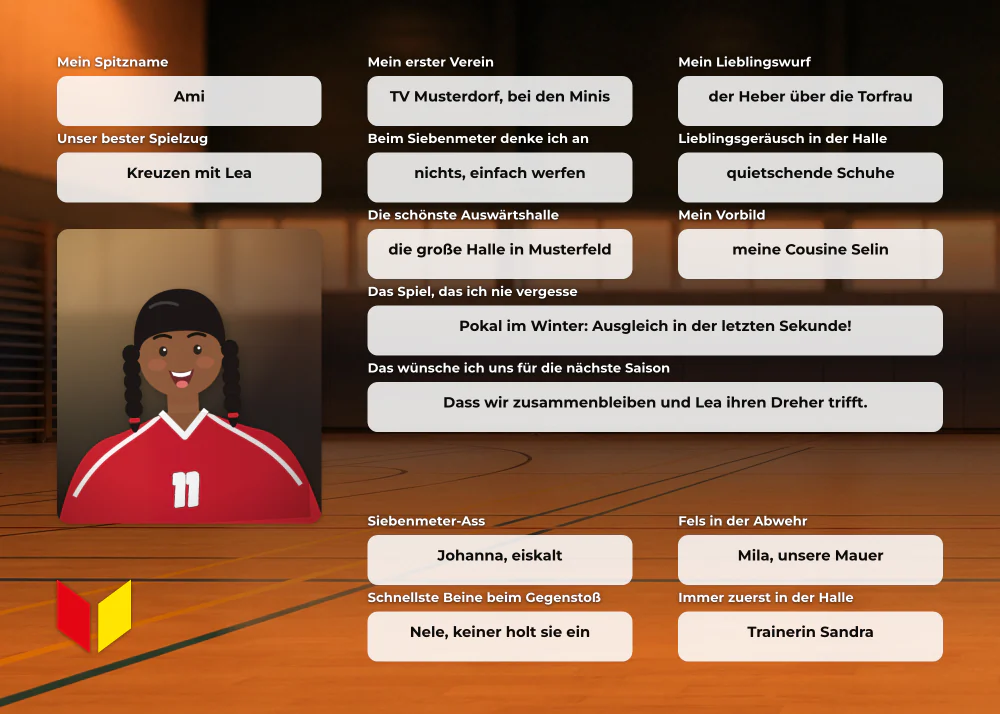
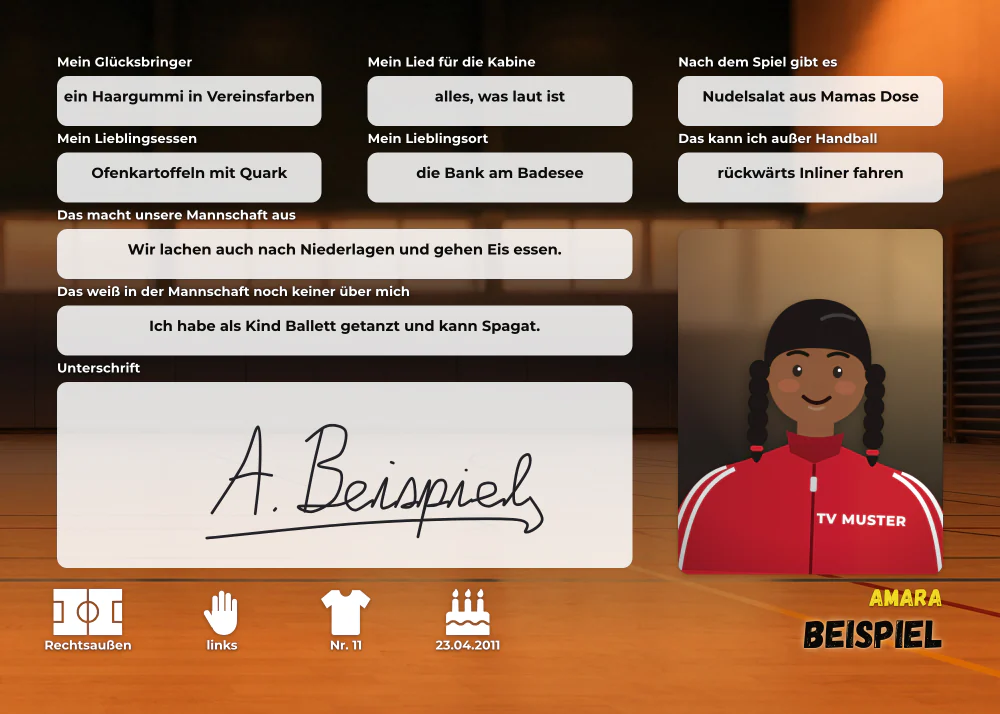
In a Flashbook, every person in the team gets their own double-page spread with two photos and their answers. There is also room for up to 4 sponsor pages, each a full page designed as you like, plus the sponsor logos on the back cover. The sponsor pages are included in the price. A sponsor can also cover part of the cost of the books: 16 players and 2 coaches make 18 books for €448.20. If a sponsor pays €180, each person only pays €14.90.
Goods instead of money
Many businesses find it easier to give something they already have: balls, drinks for the summer party, the minibus for an away trip, prizes for the raffle. Put wishes like these explicitly in your offer.
Personal contact instead of advertising space
Invite your sponsors to the end-of-season party, let them take the ceremonial kick-off at a home match and send them a Christmas card signed by the whole team. It costs little and stays in the memory longer than a logo.
Writing to sponsors: making the first contact work
The letter is rarely the first step. Ideally, the person who knows the owner asks briefly in person, and the letter follows as a summary they can pass on. Five things make the difference:
- A personal link in the first sentence: who is writing, and how do you know each other?
- A concrete goal: “New shirts for the under-13s” is more convincing than “support for the club”.
- A clear return: what the sponsor gets is in the letter, not saved for a later conversation.
- Short, with a photo: one page is enough. A team photo shows who the money is for.
- Follow up: if you hear nothing after two weeks, call or drop by. A no is an answer too, and maybe it will work out next season.
Sample letter: writing to sponsors for your club
This template for a sponsorship letter is formal because it goes to a business. If you know the person well, simply write more casually. Replace everything in square brackets and delete whatever does not fit.
Attach a team photo and, if you already have one, a short overview of your packages. For businesses you visit in person, leave a printed copy of the letter.
If you are writing to a business in Germany or Austria, a letter in German is usually the better choice. The German version is on the German page of this guide.
Practical points: timing, responsibility and saying thank you
Who looks after it? One person keeps track of the list, the commitments and what was promised in return, for example someone from the committee or a dedicated parent. They also make sure promised logos really end up on banners, the website and shirts.
When to ask? Early, not two weeks before the shirts are ordered. Some businesses plan their budget for the following year in the autumn, and shirts or banners take time to deliver.
How to say thank you? Send a photo after the handover, mention the sponsor on your channels and get in touch at the end of the season with a short review. Sponsors who feel noticed are more likely to come back next season.
Donation or sponsorship? Whether you issue a donation receipt or an invoice for advertising has tax consequences for both the club and the sponsor. Clarify this beforehand with your treasurer, the club's tax adviser or your regional sports federation (Landessportbund). This guide is not tax or legal advice.