
The best team building activities for youth sports are not a single weekend at a high ropes course, but lots of small moments: the warm-up game where everyone has to talk to each other, the deliberately mixed room allocation on a trip, the circle after a defeat. Here you will find games and exercises for the pitch and the sports hall, sorted by age, plus ideas for off the pitch. Many examples come from football, but they work for any team sport.
What team building activities for youth sports should achieve
Team building should mean that everyone knows each other, relies on each other and talks to each other, including the quiet ones and the newcomers. Good exercises are short, mix up the cliques and give every person a role. Initiation rituals that humiliate someone have nothing to do with it and have no place in any team.
Team building games for children up to about 10
With little ones, team building works through play and movement. Explain little, play a lot and praise the team rather than individual children.
Name ball
Everyone stands in a circle. Before passing the ball, you call out the name of the child who will get it. After a few rounds, a second ball is added. Just right after the age groups change over, when not everyone knows each other yet.
The shrinking island
The team stands on a tarpaulin spread out on the ground. After each round, the tarpaulin is folded once, and everyone has to hold on to each other so nobody falls into the “water”.
Chain tag
Whoever gets caught takes the catcher's hand and joins in catching. The chain must not break, so everyone has to agree on where to go.
Your own team chant
The children make up their own chant or ritual before kick-off. If they have come up with it themselves, they will shout it loudly.
Team building exercises for 10 to 14-year-olds
At this age, cliques form and it starts to matter who plays with whom. Good exercises force people to talk and mix up the pairs.
The human knot
Eight to ten children stand in a circle, stretch their hands into the middle and take hold of two hands belonging to different people. Now untangle the knot without letting go. It only works if everyone listens.
Blindfolded through the cone course
One person wears a blindfold, and their partner guides them through a course on flat grass using only their voice, later with the ball at their feet. Then they swap. It builds trust and clear communication.
Lining up in silence
Without a word, the team lines up by birthday, then by shoe size or shirt number. Anyone who speaks restarts the round.
The team record
The whole team keeps a ball in the air, and every person must have touched it once before anyone gets a second touch. Write down the record and try to beat it every week.
Drawing pairs
Draw new partners for every exercise instead of letting players choose. That way, over the course of a month, everyone plays with everyone else.
Team building for teenagers: having a say and taking responsibility
From around 14, players want to be taken seriously. Team building here means having a say, taking responsibility and giving honest feedback.
Writing your own rules
At the start of the season, the team decides for itself what applies: punctuality, phones in the changing room, how to deal with defeats. Everyone signs, and the sheet hangs in the changing room. Many people stick to their own rules more readily than to the coach's.
A team council, not just a captain
Three or four elected players speak for the team, help plan trips and parties and raise problems before they grow.
Notes on backs
Everyone has a sheet of paper on their back, and the others write one sentence on it about what they value in that person. They only read it at home. It takes ten minutes, and some people keep their sheet for years.
The older ones coach the younger ones
Once a month, the under-17s lead a training session for the under-9s. The older players realise how hard explaining is, and the little ones have role models.
Team building off the pitch
Many teams do not grow together in training, but before and after it. That is where a lot of the team bonding happens.
- Eat together: pizza after the last training session before the holidays, a barbecue at the clubhouse.
- Watch together: a first-team match, a professional game or a tournament in a completely different sport.
- Muck in together: act as ball kids for the adults, help set up the club party, tidy the grounds.
- Stay overnight: a night in the clubhouse with a night walk and breakfast. For a proper trip, there are ideas by age and budget in our team trip ideas.
- Let them tell their stories: once you know the goalkeeper plays the violin and the quiet defender has three little siblings, you treat them differently.
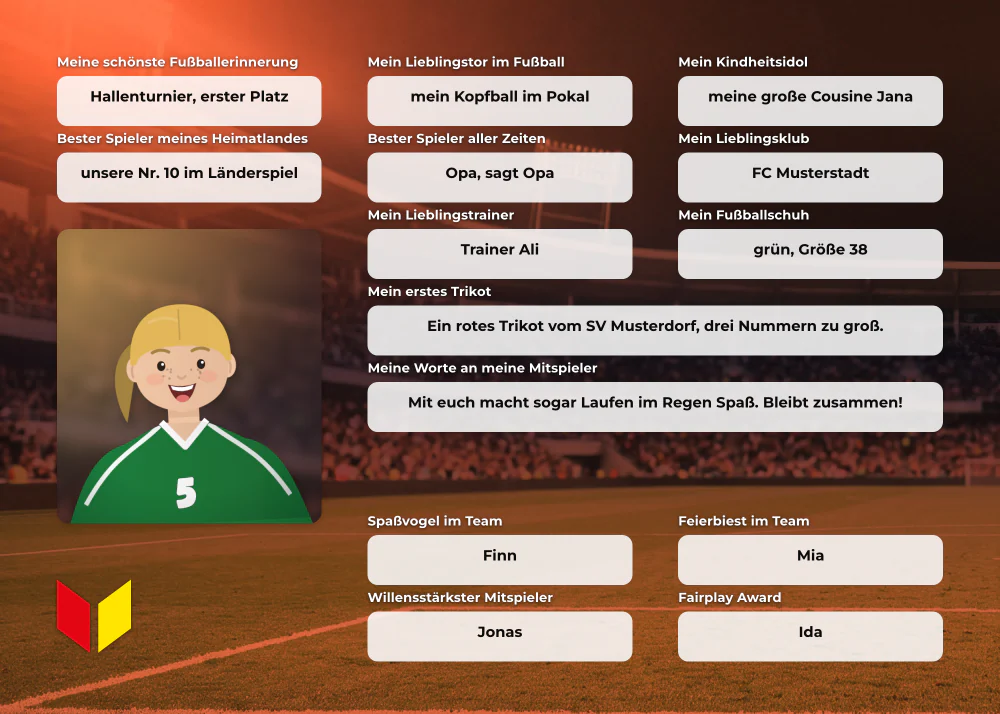
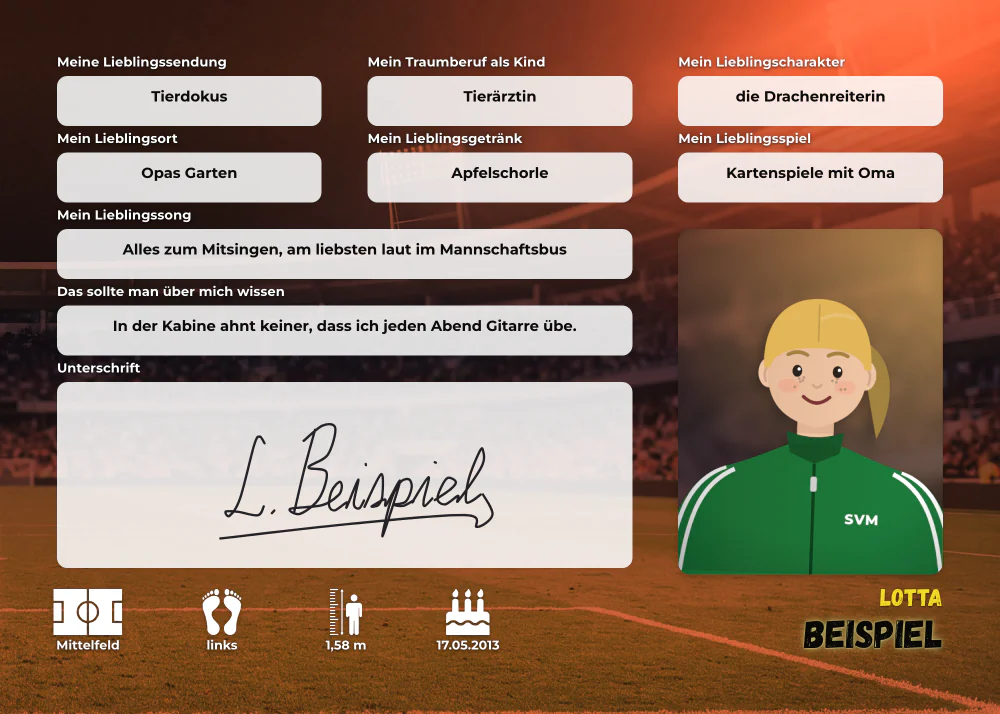
A book in which every person has their own double-page spread
In a Flashbook, every person in the team answers questions on their phone and uploads two photos; each gets their own double-page spread. Reading it, everyone learns things about each other that never get told in the changing room. On top of that come the team photo, team awards and pages for signatures and messages. For children, the parents fill in the questionnaire. For football, everything is on our page about the football team yearbook.
When team building makes the biggest difference
Do not wait for a crisis to plan team building. Good moments are:
- Start of the season: new players after the age groups change over, a new coaching team.
- Winter break: time for something bigger off the pitch.
- After a losing streak or a falling-out: talk first, then a game that can only be won together.
- Before a tournament or a trip: mix rooms and groups on purpose.
The coach does not have to organise it all alone. For everything off the pitch, there are people in the parents' group chat or the team council who enjoy planning. Most games cost nothing; for outings, the team kitty helps, and there are ideas for filling it in the guide Fundraising ideas for sports clubs.